By Red Lime Media Staff
A company can be successful and still be badly prepared for its next stage of growth. I have worked with businesses that started at ground zero. The owner knew every customer. Employees learned by standing next to somebody who had been there longer. A customer problem could be solved by walking down the hall. Leads came from relationships and referrals. Important information lived in an inbox, a notebook, or somebody’s head. And for a while, it worked. The problem showed up as the company got bigger. There were more customers. More employees. More leads. More vendors. More technology. More decisions. The informal way of doing business that had once made the company fast started making it harder to see what was happening. The owner thought the company needed more marketing. Sales thought it needed more leads. Someone else wanted a new CRM. Another person wanted to add AI. But before spending more money, there was a more basic question to answer:
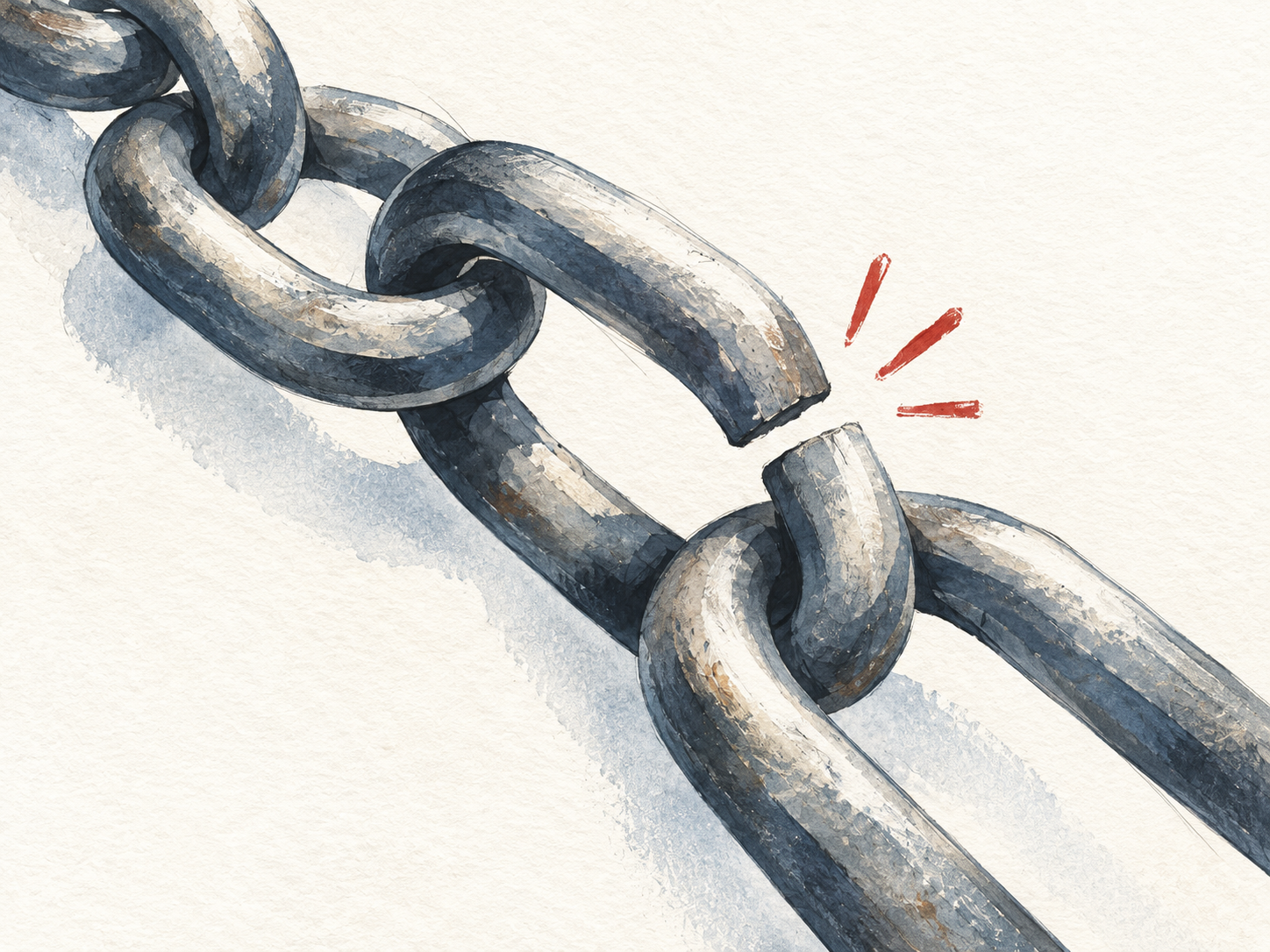
Where is growth actually breaking down? That is what I call the growth gap.
Growth does not always break where you can see it
One of the problems with growth gaps is that the symptom and the cause are often in different places.
A company can have plenty of website traffic and very few inquiries.
That may look like a traffic problem. It could actually be a conversion problem.
A business can generate good leads but close very few of them.
That may look like a marketing problem. The real problem may be that nobody has a defined follow-up process.
A company can have customers who love its work but struggle to attract new customers online.
The missing piece may be its online reputation. The good experience exists, but there is very little digital evidence of it.
This is why simply adding more marketing can be expensive. If there is a hole farther down the customer journey, sending more people into the system simply sends more people toward the hole.
Before you fix the gaps, map the business
When a growing company has been operating through habit and memory, I don’t think the first answer is to write a 100-page procedure manual. First, we need to see the business. How does someone discover you? What happens when that person visits your website? What happens when they call or complete a form? Who receives the lead? Who follows up? Where is that activity recorded? What happens if the first person responsible for the task is out of the office? How do you know whether any of it worked? This is the architecture. Once those connections are visible, you can start deciding what needs a process, what can be automated, what should remain human, and what should be measured. That approach is consistent with formal process-management principles as well. ISO’s process guidance calls for organizations to understand inputs and outputs, sequence and interaction, responsibility, risk, monitoring and measurement before deciding what needs formal documentation. Technology and documentation are tools supporting the process. They are not the goal themselves. That distinction matters. A bad process documented perfectly is still a bad process.
Six places I look for growth gaps
At Red Lime Media, we look at growth across six connected areas.
1. Visibility: Can the right people find you?
Before worrying about clicks, impressions, or followers, start with something simpler. When a potential customer needs what you sell, does your company appear where that person is looking? That may include Google, local search, industry searches, social channels, referral sources, and increasingly AI-assisted search. Visibility also needs to be the right visibility. Ten thousand people who will never buy from you are less useful than 100 people who have the problem your company solves. That is why visibility has to begin with the customer, not the platform.
2. Website Conversion: What happens after they find you?
Getting someone to your website is only the first handoff. The next question is whether your website helps that person understand three things quickly: What do you do?
Is it for someone like me? What should I do next? This is where companies sometimes have a marketing problem hiding inside a website problem. There may be plenty of traffic. But the offer is unclear. The contact form is buried. The pages talk about the company instead of the customer’s problem. Or there are five different calls to action competing for attention. Your website should not simply exist. It has a job.
3. Reputation: Is there evidence behind what you say?
Every company says it provides excellent service. Your customers are looking for proof. BrightLocal’s 2026 Local Consumer Review Survey found that 97% of surveyed consumers use reviews when making purchasing decisions. After reading positive reviews, 54% said they were likely to visit the company’s website. Recency also matters: 74% said they cared about reviews written within the previous three months. That creates an interesting connection. Reputation does not sit in a separate marketing box. Reviews lead people to your website. Your website shapes the next impression. Your follow-up affects the customer experience. That experience can eventually create another review. It is a system.
4. Lead Handling: What happens when somebody raises their hand?
This is one of the least glamorous parts of marketing, and one of the first places I look. Submit your own contact form. Call your own business. Request information. Then watch what happens. Does someone receive an alert? Is the lead entered into a CRM? Does anybody know who owns it? Can management tell whether it was contacted? If a company spends money generating leads but has no reliable way to receive, assign, and track them, its marketing numbers can be misleading. The lead existed. The system lost it. Those are two different problems.
5. Follow-Up: Does the business depend on somebody remembering?
This is where the “everything is in someone’s head” problem becomes expensive. A salesperson has a great meeting. They plan to follow up Friday. Friday becomes Monday. Then another proposal needs attention. A customer calls. Someone is out sick. Two weeks later, the lead is sitting somewhere in an inbox. Nobody intentionally decided not to follow up. There simply was no system responsible for making sure it happened. That is a growth gap. Good follow-up does not require removing people from the process. It means using the CRM, reminders, templates, and automation where appropriate so the routine parts happen consistently and the human being can focus on the conversation.
6. AI Readiness: Are you automating a process—or automating confusion?
AI has made this question much more urgent. Companies are adding AI tools before they have defined the work the AI is supposed to improve. That is backwards. Before automating a task, I want to know: What triggers it? What information does it need? Who owns it? What should the output look like? What requires human approval? Where should the information be stored? How do we know whether it worked? Once those questions have answers, AI can become useful. Without them, companies can simply perform an inconsistent process faster.
Then we add the layer most companies skip: measurement
Once we can see the system, we can measure it. Not everything that can be counted matters. Website visits do not automatically mean growth. Social impressions do not automatically mean growth. Emails sent do not automatically mean growth. We need to follow the path. Visibility. Visits.Inquiries. Qualified leads. Appointments. Proposals. Sales. Repeat customers. Reviews. Revenue.
The metrics will be different for every company, but the principle is the same: measurement should tell us where people are moving forward and where they are dropping out. ISO’s process guidance makes the same connection between process management and measurement: organizations need defined monitoring and measurement points so they can evaluate whether processes are producing their intended results and improve them based on evidence. That is where analytics becomes useful. Not as another dashboard to look at. As a way to decide what needs attention next.
You may not need more marketing
That can be a difficult sentence for a marketing company to put on its own website. But it is true. Sometimes you need more marketing. Sometimes you need to fix the website before sending more traffic to it. Sometimes you need a reputation system. Sometimes you need a CRM process so the leads you already have stop disappearing. Sometimes you need to document what one employee has been carrying around in her head for six years. Sometimes you need better data. And sometimes you need to stop adding technology long enough to figure out what the technology is supposed to solve. Growth becomes easier to manage when you can see the whole path instead of treating every problem as a marketing problem. That is why at Red Lime Media, we start by looking for the gaps. Because before we decide what to add, we want to know what is missing.
Where is growth breaking down in your business?
Start with the Red Lime Media Growth & AI Scorecard to examine six areas of your business: visibility, website conversion, reputation, lead handling, follow-up and AI readiness.
Find the gap before you spend money trying to fix the wrong problem.